
VolleyCraft
VOODOOStrategy
3.989.00 Reviews
- Version
- 1.5.3
- Installs
- 50.00K
- Age Rating
- Everyone 10+
Screenshots
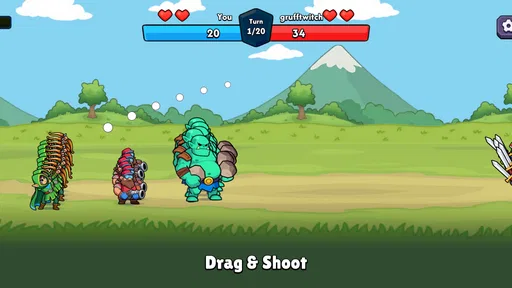
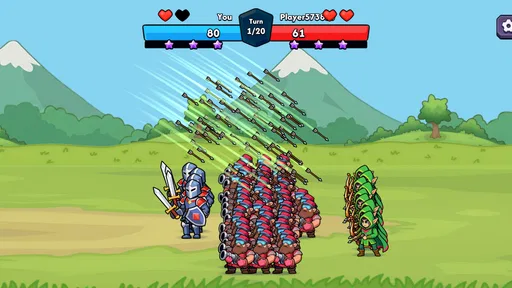
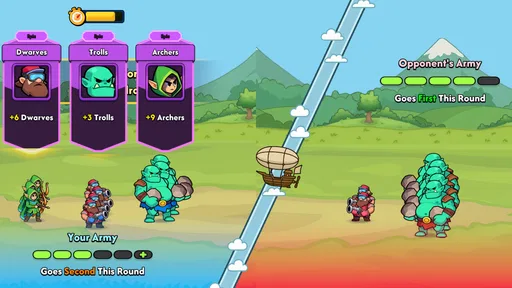
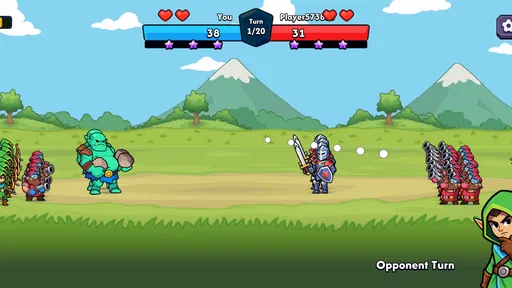
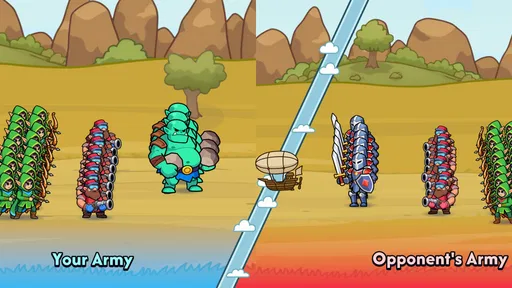

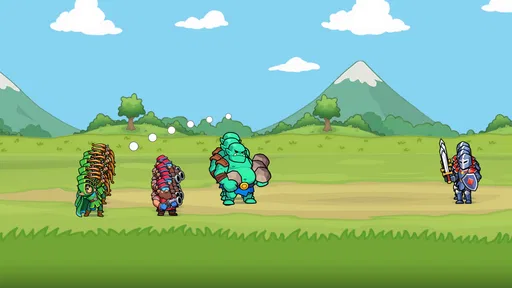
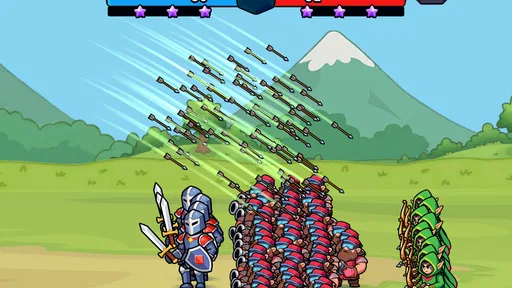
Our Review of VolleyCraft
 Analysis by Appyee
VolleyCraft caught my attention because it tries to make a tactical duel feel immediate rather than overwhelming. I played it as the kind of strategy game I could open for a short session, make a few meaningful decisions, and leave without needing to memorize a huge rulebook. Its basic idea is easy to understand: build an army, take turns, and use shooting decisions to outplay another side. The interesting part is how those ingredients create tension in a compact format.
That compactness is also the first thing to understand before downloading it. This is not a sprawling strategy campaign with a large world to explore, nor is it simply an action shooter where quick reflexes solve everything. VolleyCraft sits between those styles. It is a turn-based tactical game in which positioning, unit choices, timing, and the consequences of each attack matter more than constant movement.
I found that combination most appealing when I wanted something more thoughtful than a quick arcade match but less demanding than a long-form strategy title. The game is free to start, and VOODOO presents it as a strategy release for players aged Everyone 10+. It had a 3.9 average from around 1.4 thousand ratings when I reviewed it, which feels consistent with the experience: the central idea is accessible and enjoyable, but the streamlined presentation and monetisation may not suit every strategy fan.
VolleyCraft makes a strong first impression through short, readable decisions
The opening experience works because the game does not bury its main appeal under unnecessary complexity. I quickly understood that every turn is a small problem to solve. I need to think about which part of my army should act, where pressure is most useful, and whether an attack is worth committing now or saving for a better opportunity. That rhythm gives the game a clear identity from the beginning.
The title itself suggests energy and directness, and the presentation follows that lead. Battles feel built around the anticipation of a volley: prepare, aim, commit, then deal with the result. Even when the action is simple, the turn structure gives each choice a little weight. I was not just tapping through a sequence of attacks. I was deciding how much of my plan to reveal and how much risk to accept.
That makes it easy to recommend for players who enjoy strategy games on mobile but do not always have time for a long session. A realistic use case is a commute or a short break when I want a complete tactical exchange rather than an endless progression loop. The turn-based format is especially helpful in those moments because it does not demand the same continuous attention as a real-time battle.
At the same time, I would not describe the first matches as deeply strategic in the same way as a large board-game adaptation. VolleyCraft aims for fast understanding. That is a strength for newcomers, but experienced strategy players may initially feel that the decision space is narrow. The game has to build depth through how its units, attacks, and positioning interact, rather than through a large number of separate systems.
The free entry point lowers the risk of trying it. The game is listed as free, while optional purchases range from less than a dollar to amounts approaching a hundred dollars per item. That range is important to keep in mind before getting invested. I prefer to treat the free experience as a chance to test whether the tactical loop itself is satisfying, rather than assuming that spending will automatically make the game more enjoyable.
The visual language keeps the battlefield easy to read
VolleyCraft’s art direction is most successful when it supports clarity. In a tactical shooter, visual noise can make a match feel unfair, especially when the player needs to understand who can act and what a move might accomplish. The game’s compact presentation gives the battlefield a readable mood: the focus stays on the opposing army, the next decision, and the result of the exchange.
I appreciate that the setting does not appear to compete with the mechanics. There is a sense of a stylised conflict rather than an attempt to build a detailed military simulation. That choice helps the game remain approachable. I can concentrate on the practical question of how to win the duel instead of interpreting a complicated fictional world or learning a long list of lore terms.
This visual simplicity also shapes the emotional tone. VolleyCraft feels more like a focused contest than a dramatic war story. The mood is competitive, brisk, and slightly playful, which fits a game built around tactical shooting in turns. The presentation gives the battles enough personality to avoid feeling like a spreadsheet, while leaving enough space for the player’s choices to remain the main event.
One useful habit I developed was to read the battlefield as a sequence of opportunities instead of looking only at the most obvious target. A direct attack may be tempting, but a better turn can come from weakening the opponent’s options or protecting the part of my army that will matter next. The visual design helps this way of thinking because the match remains visually legible while I compare immediate gains with future pressure.
This is one of the game’s less obvious strengths: its style encourages tactical attention without making the player feel as if they are studying a technical diagram. That balance is valuable on a phone, where overly dense interfaces can turn a promising strategy game into work.
Sound and pacing give each turn a sense of consequence
The game’s mood depends not only on what is shown but also on how the action is paced. A turn-based shooter needs pauses to create anticipation, yet those pauses cannot become dead time. VolleyCraft works best when the wait before an attack feels like part of the decision. I found myself considering the likely response while the current exchange was still unfolding.
That pacing makes the game feel more deliberate than a conventional quick-fire shooter. The action is not about holding a button and reacting continuously. Instead, the rhythm comes from alternating control. I act, the opponent responds, and the match gradually reveals which plan is holding together. Even a basic attack can feel more significant when it changes the shape of the next turn.
The sound design supports that compact competitive mood rather than trying to turn every moment into a cinematic event. Audio cues help give attacks and transitions a sense of completion, while the overall presentation keeps the player focused on the duel. I found this especially useful when playing in short sessions: the match has a recognisable cadence, so I can quickly settle into its pace instead of spending time figuring out how the game wants me to feel.
There is a trade-off here. Players who want explosive action, constant movement, and a loud stream of rewards may find the deliberate rhythm restrained. VolleyCraft asks for patience between decisions. That patience is part of its appeal, but it also means the game is not a direct replacement for a fast multiplayer shooter or a reflex-based arcade title.
My practical advice is to approach each turn as a complete thought. Do not tap simply because an attack is available. First look at what the opponent is threatening, then consider whether your strongest move creates a better position or merely produces a satisfying number on screen. The pacing gives enough room for this, and using that room is where the game begins to feel more strategic.
Where the tactical loop fits among mobile strategy games
VolleyCraft occupies an interesting middle ground. Compared with a traditional turn-based strategy game, it appears quicker to understand and more focused on direct confrontations. Compared with a standard shooter, it gives me more time to plan and less pressure to rely on reflexes. Compared with a card battler, its appeal comes from the battlefield exchange rather than from building a deck around combinations.
That makes it a good choice for someone who likes the idea of tactical combat but is put off by games that require a long campaign or a large collection of systems. It can also suit players who enjoy competitive thinking but prefer to make decisions one at a time. I would particularly suggest it to a friend who wants a mobile game that feels active without demanding constant finger movement.
The limitation is that this focused design may not provide enough variety for everyone. If your favourite strategy games are built around city management, diplomacy, research trees, or long-term economic planning, VolleyCraft is likely to feel too narrow. Its challenge is concentrated inside the duel. There is less appeal for players who need a broad world map or a campaign that changes dramatically from one chapter to the next.
Another important trade-off is the relationship between accessibility and mastery. A simple ruleset makes the first matches inviting, but it can also make repeated play depend heavily on how much variety the army-building and tactical encounters provide. I found the game most enjoyable when I treated each duel as a puzzle with a different pressure point, rather than expecting a huge strategic sandbox.
The current release I played was version 1.5.3, and the game supports devices running Android 8.0 or later. That makes it approachable for many Android users who do not own a recent flagship phone. The practical question is less about having the newest hardware and more about whether the game’s short, focused battles match your preferred style of play.
Small decisions matter more than simply attacking first
The most useful tactical lesson I took from VolleyCraft is that initiative is not automatically the same as advantage. Acting first can feel powerful, but an early attack may expose the rest of the army or leave fewer useful options for the next exchange. I had better results when I considered what my move would force the opponent to do afterward.
A second lesson concerns army building. It is tempting to choose the units or options that look strongest in isolation. In practice, a balanced group is often easier to use because it gives me more answers when the opponent changes the pressure. A force that is excellent at one type of attack can become awkward if the match demands a different response. I recommend testing how an army behaves across several turns, not judging it from its first successful volley.
A third insight is about losing. Because matches are turn-based, defeat can often be examined as a chain of decisions rather than dismissed as bad luck or slow reactions. After a poor result, I can ask whether I committed too early, ignored a vulnerable position, or used an attack without considering the reply. That makes the game more useful as a learning experience than a purely reflexive shooter, where a failed moment may be over before I understand it.
These details are why I would not play it with the same mindset as an arcade game. The most satisfying wins are not necessarily the fastest ones. They are the matches in which I create a problem for the opponent, wait for the response, and then use the new situation instead of repeating the same attack.
Who should try it, and who should look elsewhere
I think VolleyCraft is best for players who want a compact tactical contest with a clear shooting theme. It is a sensible pick for a lunch break, a short evening session, or anyone who likes planning but does not want to commit to a large strategy campaign. The Everyone 10+ rating also places it within a broadly accessible range, although the competitive structure may still be more appealing to older players who enjoy analysing decisions.
I would be more cautious recommending it to someone who dislikes repeated duels or prefers a strong narrative. The game’s atmosphere comes from the contest itself, not from a rich story that carries the player between battles. Likewise, players who want a completely purchase-free experience should examine the optional item pricing carefully before spending time with it. The game can be tried without an upfront purchase, but the presence of items priced from $0.99 to $99.99 means personal spending limits matter.
Players searching for a deep long-term strategy simulator may be happier with a title centred on resource management and campaign planning. Someone who wants immediate action may prefer a real-time shooter. VolleyCraft makes the most sense for the person between those two audiences: a player who wants the tension of combat, the clarity of turns, and enough tactical choice to make each exchange feel deliberate.
Its current audience is still modest compared with the largest mobile games, with over 50 thousand installs and 89 written reviews shown alongside its ratings. I do not see that as a reason to dismiss it, but it does set expectations. This feels like a focused game to judge by the quality of its central loop, not by the size of its surrounding ecosystem or by the assumption that it offers the breadth of a major strategy platform.
My final view of the atmosphere and the game underneath it
What stays with me after playing VolleyCraft is the way its art direction, audio mood, and pacing all point toward the same idea: a compact tactical showdown in which a volley is both an attack and a decision. The game does not need an elaborate setting to create tension. Its atmosphere comes from the pause before committing, the visual clarity of the opposing army, and the changing balance after each exchange.
That coherence matters because the mechanics are intentionally focused. The presentation gives the turn-based structure enough character to feel like a game rather than a bare ruleset, while the rules keep the atmosphere from becoming decorative. I always understood that the mood existed to support the duel, not distract from it.
My recommendation is positive, with a clear condition: try VolleyCraft if you want short, readable tactical battles and enjoy learning from decisions. Give it time to show its rhythm instead of judging it as a conventional shooter. If you need a large campaign, constant action, or a broad management system, it is probably not the right fit.
For me, the strongest reason to keep it installed is the way it turns a simple attack into a question about timing, positioning, and the next response. The weakest point is the same focus: once the compact duel stops feeling fresh, players looking for much wider strategic variety may move on. Still, as a free strategy game from VOODOO with a distinctive turn-based shooting identity, VolleyCraft is worth trying when you want a thoughtful match that fits into a small pocket of time.
Verdict
Strengths of VolleyCraft
- Simple controls make matches easy to pick up.
- Quick games suit short play sessions.
- Competitive matches offer replay value.
- Team play encourages tactical coordination.
- Runs well on most modern mobile devices.
Limitations of VolleyCraft
- Online matchmaking may depend on your region and player activity.
- Limited customization can reduce long-term personalization.
- Some features may require in-app purchases.
- Repetitive matches can feel monotonous over time.
- A stable internet connection may be needed for online play.
Other Releases by VOODOO
View All


Similar Picks in This Category
View All
Clash of Clans
Supercell4.5

Plants vs. Zombies™
ELECTRONIC ARTS3.7

Lords Mobile: Kingdom Wars
IGG.COM4.5

Clash Royale
Supercell4.4

State.io — Conquer the World
CASUAL AZUR GAMES4.1

Car Driving School : Car Games
Spark Game Studios3.9
Frequently Asked Questions
What is VolleyCraft, and what can I do in the game?
VolleyCraft is a volleyball-focused game that combines traditional match gameplay with a creative, craft-inspired presentation. Players can take part in volleyball matches, control rallies, serve, receive, set, and attack while working toward better results. Depending on the available game modes, you may also be able to improve characters, unlock content, and compete through progressively more challenging opponents.
Is VolleyCraft suitable for beginners who have never played a volleyball game?
Yes, VolleyCraft is generally approachable for newcomers because its core controls are easy to understand after a few minutes of practice. New players can learn the timing of serves, passes, sets, and spikes without needing advanced volleyball knowledge. However, winning consistently requires attention to positioning and timing, so the later stages may still provide a meaningful challenge.
Does VolleyCraft require an internet connection to play?
The connection requirements can depend on the specific version and features available on your device. Basic or single-player content may work offline, while online competitions, rankings, advertisements, cloud saving, or other connected services may require internet access. It is worth checking the store listing and the permissions shown before downloading, especially if you plan to play while traveling.
Are there in-app purchases or advertisements in VolleyCraft?
VolleyCraft may include optional purchases or advertising, as is common with many free mobile games. These could be used to unlock cosmetic items, speed up progression, obtain additional resources, or support the developer. Before installing, review the Google Play or App Store listing for current pricing and purchase information, and use device-level parental controls if children will be playing.
Which devices support VolleyCraft, and is it safe to download?
VolleyCraft should be downloaded through an official source such as Google Play for Android or the Apple App Store for iPhone and iPad. Compatibility depends on the developer’s current minimum operating-system and hardware requirements, so check the store page before installation. Using official download links helps ensure that you receive the legitimate version and reduces the risk of modified or unsafe files.
Play our best games!


